TRIAL OVERVIEW
Xx

ELIGIILITY CRITERIA
Inclusion criteria:
Adults (age ≥18 years)
Surgical confirmed NSTI (defined by perioperative tissue characteristics observed by the surgeon. The diagnosis is based on sign as necrotic or deliquescent soft tissue with widespread undermining of the surrounding tissue)
Exclusion criteria
Contraindications for HBO2 treatment according to local protocol, e.g., undrained pneumothorax
Confirmed pregnancy
Referred to palliative care
Previously randomized into the HOT-NSTI trial
Known objection by the patient to participate in the trial
Allergy against study drug

TREATMENT PROTOCOL
Patients will be randomized to either standard of care or standard of care + adjunctive sessions of HBO2 treatment consisting of 60-90 minutes (according to local protocols) 2.8ATA (284 kPa (≈18 m’ seawater equivalent)) 100% oxygen breathing (compression time ≥5minutes/decompression time ≥15 minutes as per local procedures). The first session will be performed as soon as possible after randomization at the trial site, and at least within 12 hours from randomization. A minimum of three sessions will be performed within 48 hours after randomization. If the patient is considered clinical unstable after the initial three sessions (e.g. ongoing progression of the necrotising process or requiring intravenous blood pressure support in a dosage considered not related to sedation agents) additional sessions must be administered at a rate of one per approximately 24 hours, up to a maximum of five treatments. All sessions must be completed within a total timeframe of 96 hours from randomization.

OUTCOMES
Primary endpoint:
30-day all-cause mortality post-randomization
Secondary endpoints:
90-day all-cause mortality post-randomization
Amputation (y/n) within 7 days post-randomization
Tertiary endpoints:
Quality of life at Day 90 evaluated with the 5Q-5D-5L and the WHO-DAS questionnaire.
Days alive and out of hospital in the 90-day period
Ventilator-free days within 7 days post-randomization
Need for renal-replacement therapy (y/n) within 7 days
Number of patients with one or more serious adverse events up to 24 hours after last treatment
TRIAL SITE ELIGIBILITY CRITERIA
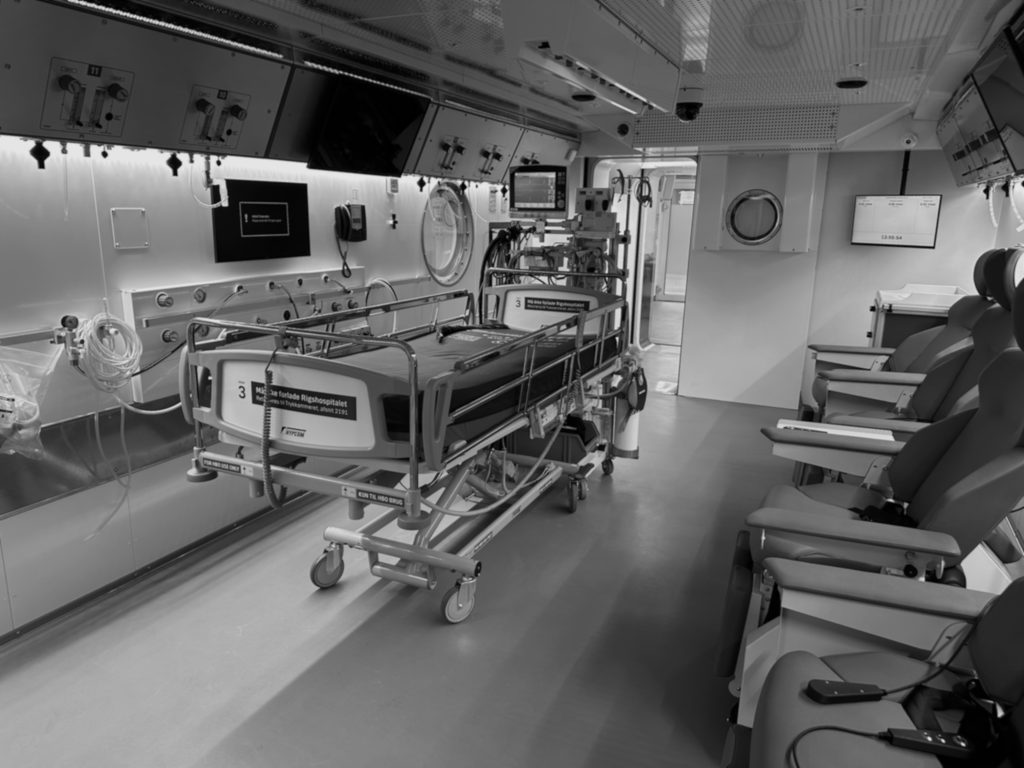
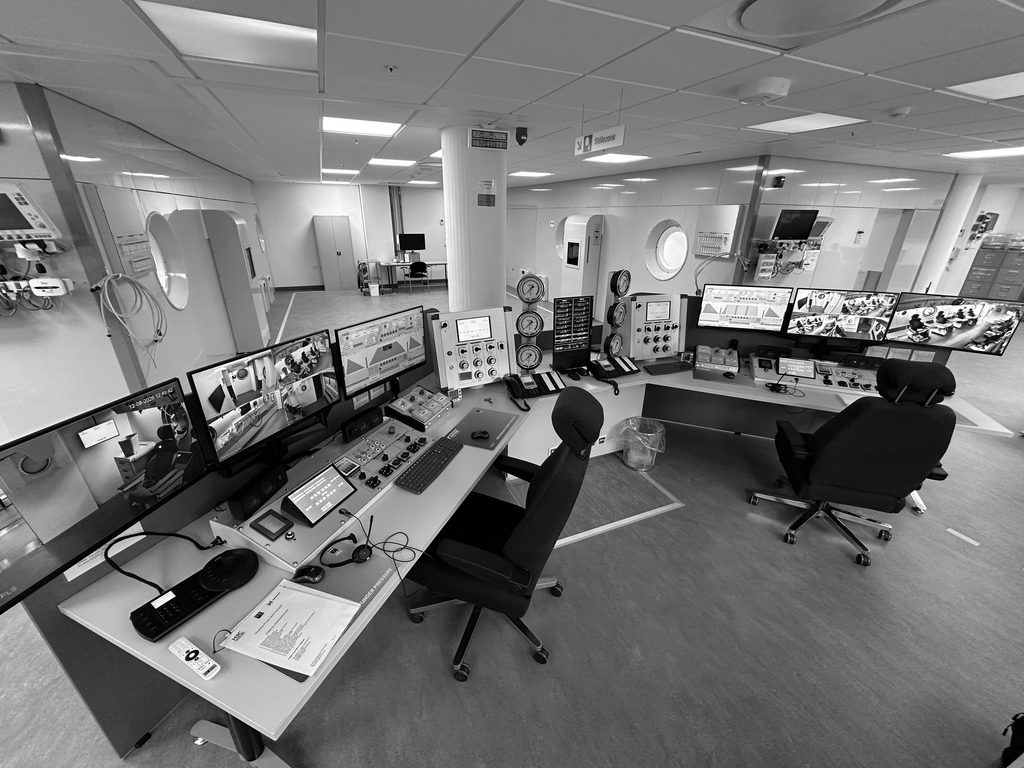
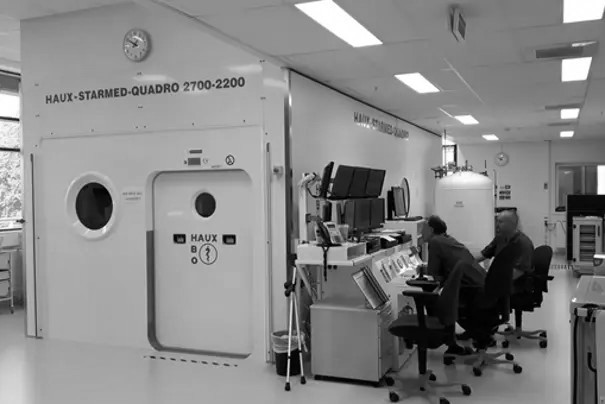
There are several safety and logistic issues involved with HBO2 treatment of patients with NSTI. Some of these issues are the same as any other patient group treated with HBO2 whereas some issues arise when treating critically ill patients. Careful consideration and preparation are needed when executing HBO2 treatment in the critically ill patient. HBO2 treatment of critically ill patients is best suited in a modern multichambered setting as the patient can be treated in the ICU-bed while co-interventions such as mechanical ventilation, monitoring, infusion of vasopressor/inotrope, intravenous antibiotics and other procedures requiring hands-on can be performed. The multichamber should ideally be in close vicinity to the ICU thereby limiting transportation time of the haemodynamically unstable patient. Moreover, the hyperbaric staff must be properly qualified, trained, and experienced when handing intensive care patients in the hyperbaric environment. To increase patient safety in the HOT-NSTI trial, we have therefore carefully set up some strict trial site criteria addressing the above-stated recommendations:
- 1. Hyperbaric facility must be placed in-hospital and local staff experienced in in-hospital transport of patients from ICU/operating theater to chamber.
2. The chamber must be fully ICU-capable allowing ICU-administered interventions to continue including mechanical ventilation, IV-infusions, pleural drain tubing’s with suction etc., while receiving the intervention.
3. Trial site must treat an expected minimum average of 5 NSTI cases annually.
4. An hyperbaric oxygen-certified ICU-physician or anesthesiologist, or other hyperbaric oxygen-certified physician with documented experience in handling ICU-patients in a hyperbaric multi-place chamber setting (according to national standards and local protocol) must be responsible and present at the hyperbaric chamber while the patient receives the intervention